


Understanding heart rhythm disorders can feel overwhelming, especially when trying to differentiate between conditions like sinus arrhythmia and atrial fibrillation (AFib). It’s important to know that while sinus arrhythmia is often a benign and natural variation in heart rhythm, AFib carries significant health risks that need careful management. Many individuals seek clarity on these two conditions, and it can be challenging to recognize the subtle yet crucial differences in symptoms and treatment approaches.
How can you navigate this intricate landscape of heart health to ensure timely and effective care? Remember, you’re not alone in this journey. Seeking support and information is a vital step towards understanding your health better. Together, we can explore these conditions and find the best path forward for your well-being.
Sinus irregularity is a natural fluctuation in heart rhythm that occurs with breathing. It’s something we often see in healthy individuals, especially younger ones. This condition reflects a normal physiological response and is generally benign. You might experience symptoms like palpitations or a feeling of dizziness, but these are usually not a cause for concern.
In contrast, when comparing sinus arrhythmia vs AFib, atrial fibrillation (AFib) is a more serious condition. It’s characterized by rapid and erratic heartbeats that originate from the atria. When considering sinus arrhythmia vs AFib, it is important to note that AFib can pose significant health risks, including a fivefold increased risk of stroke and potential heart failure if not treated.
At Amavita Heart and Vascular Health, we understand how worrying these conditions can be. That’s why we offer comprehensive management for irregular heartbeats. Our advanced monitoring technology helps us identify specific types of these conditions, and we provide innovative treatments designed to restore your heart's natural rhythm.
Understanding these definitions is crucial, especially for elderly patients who may be at higher risk. We’re here to support you every step of the way, ensuring you feel valued and cared for. If you have any concerns about your heart health, please don’t hesitate to reach out. Your well-being is our priority.

Many patients with sinus arrhythmia find that they experience little to no symptoms, as this condition is generally considered benign. However, some individuals might notice mild palpitations or an irregular heartbeat, especially during deep breathing.
In contrast, symptoms of atrial fibrillation (AFib) can be more noticeable and may include:
These symptoms can significantly affect your quality of life, making it essential to seek medical attention if you notice them.
Identifying the differences between these conditions is crucial for prompt diagnosis and care. If you have concerns about your heart health, don’t hesitate to reach out for support. We’re here to help you navigate these challenges with understanding and compassion.

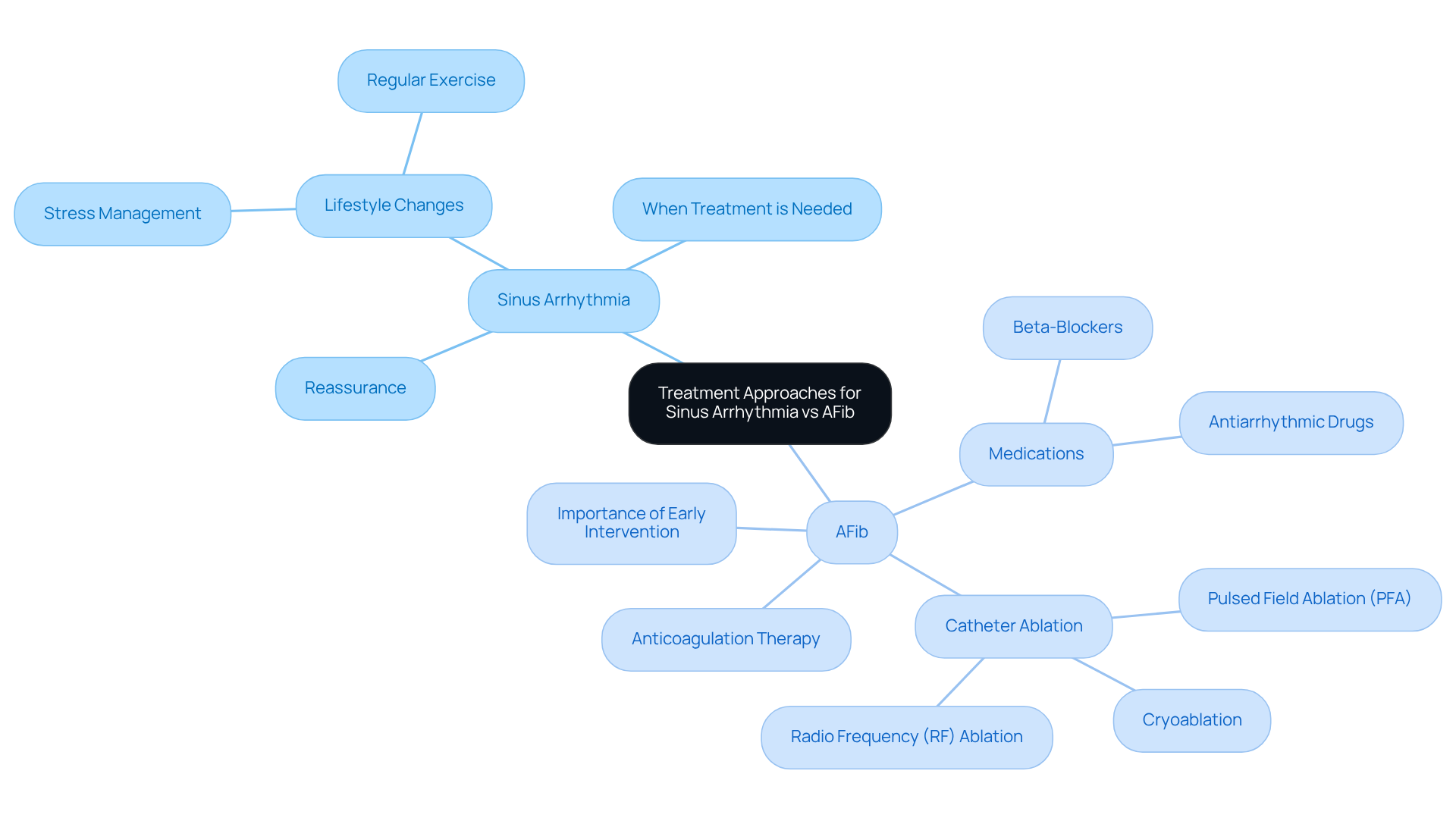
Treatment for sinus arrhythmia vs afib is usually not necessary, as sinus arrhythmia often represents a benign physiological occurrence. However, if symptoms do arise, reassurance and lifestyle changes - like stress management and regular exercise - can typically help. On the other hand, when considering sinus arrhythmia vs afib, a more comprehensive approach to care is required. This may involve medications such as beta-blockers or antiarrhythmic drugs for rate or rhythm control, along with anticoagulation therapy to reduce the risk of thromboembolic events, which can increase the likelihood of stroke by five times.
For those who don’t respond well to medication, catheter ablation might be suggested to restore a normal heart rhythm. Recent guidelines emphasize the importance of early intervention; prompt care can significantly improve long-term outcomes and lessen the impact of symptoms. At Amavita Heart and Vascular Health, our specialists use advanced imaging technology to create real-time 3D computer models of the heart. This innovation enhances the accuracy of AFib care and allows for same-day procedures, minimizing disruption to your life.
Real-world examples illustrate the effectiveness of these strategies. For instance, one patient who underwent pulsed field ablation (PFA) enjoyed a symptom-free life just one year after the procedure, highlighting the potential benefits of advanced medical options. These differing treatment approaches underscore the critical need for accurate diagnosis and personalized management when evaluating sinus arrhythmia vs afib in addressing cardiovascular health. Remember, you’re not alone in this journey; we’re here to support you every step of the way.
At Amavita Heart and Vascular Health, we understand that patient-focused care is vital in managing conditions like sinus arrhythmia vs afib. If you’re feeling anxious about your condition, know that education and reassurance can make a world of difference. We’re here to help you feel more in control and informed about your health.
When it comes to atrial fibrillation, shared decision-making is key. We encourage you to take an active role in your care plan, which may include:
This collaborative approach not only empowers you but also strengthens the bond between you and your healthcare team. Research shows that when patients engage in their care, it leads to better health outcomes, fewer hospital visits, and an improved quality of life.
At Amavita, we offer cutting-edge cardiovascular care, including advanced procedures like cardiac catheterization and stent placement. We prioritize your convenience, allowing you to return to your daily life without the stress of long hospital stays. Recent trends in patient-centered care highlight the importance of technology, such as mobile health apps like MyHeart, which help maintain ongoing communication and support.
By putting you at the center of your care, we can tailor treatments to meet your unique needs. Remember, you’re not alone on this journey; we’re here to support you every step of the way. If you have any questions or concerns, please don’t hesitate to reach out. Your health and well-being are our top priorities.

Understanding the differences between sinus arrhythmia and atrial fibrillation is crucial for managing your heart health effectively. Have you ever wondered how these two conditions differ? While sinus arrhythmia is usually a benign condition linked to normal breathing changes, atrial fibrillation poses a more serious risk that can affect your overall health and increase the chances of complications like stroke. Recognizing these differences can empower you to seek the right care and support.
Throughout this article, we’ve highlighted the gentle nature of sinus arrhythmia, which often comes with mild or no symptoms. In contrast, atrial fibrillation can lead to more noticeable and potentially debilitating symptoms. Treatment approaches vary significantly; sinus arrhythmia typically requires minimal intervention, while AFib often needs a comprehensive management plan that may include medication or advanced procedures. It’s important to remember that patient-centered care is key. Collaborating with your healthcare provider can make a significant difference in navigating these conditions.
Ultimately, understanding the nuances between sinus arrhythmia and atrial fibrillation can lead to better health outcomes. Are you staying informed about your heart health? Engaging actively with your healthcare team is essential. By prioritizing education and open communication, you can take control of your well-being and ensure you receive the personalized care that fits your unique situation. Remember, you’re not alone in this journey; support is always available.
What is sinus arrhythmia?
Sinus arrhythmia is a natural fluctuation in heart rhythm that occurs with breathing. It is commonly observed in healthy individuals, particularly younger ones, and is generally considered a benign condition.
What symptoms might be experienced with sinus arrhythmia?
Individuals may experience symptoms such as palpitations or a feeling of dizziness, but these symptoms are usually not a cause for concern.
How does atrial fibrillation (AFib) differ from sinus arrhythmia?
Atrial fibrillation (AFib) is a more serious condition characterized by rapid and erratic heartbeats originating from the atria, while sinus arrhythmia is a normal physiological response.
What are the health risks associated with atrial fibrillation?
AFib poses significant health risks, including a fivefold increased risk of stroke and potential heart failure if left untreated.
How does Amavita Heart and Vascular Health support patients with irregular heartbeats?
Amavita Heart and Vascular Health offers comprehensive management for irregular heartbeats, utilizing advanced monitoring technology to identify specific types of these conditions and providing innovative treatments to restore the heart's natural rhythm.
Why is understanding these conditions important for elderly patients?
Understanding sinus arrhythmia and atrial fibrillation is crucial for elderly patients, as they may be at higher risk for these conditions and their associated complications.